
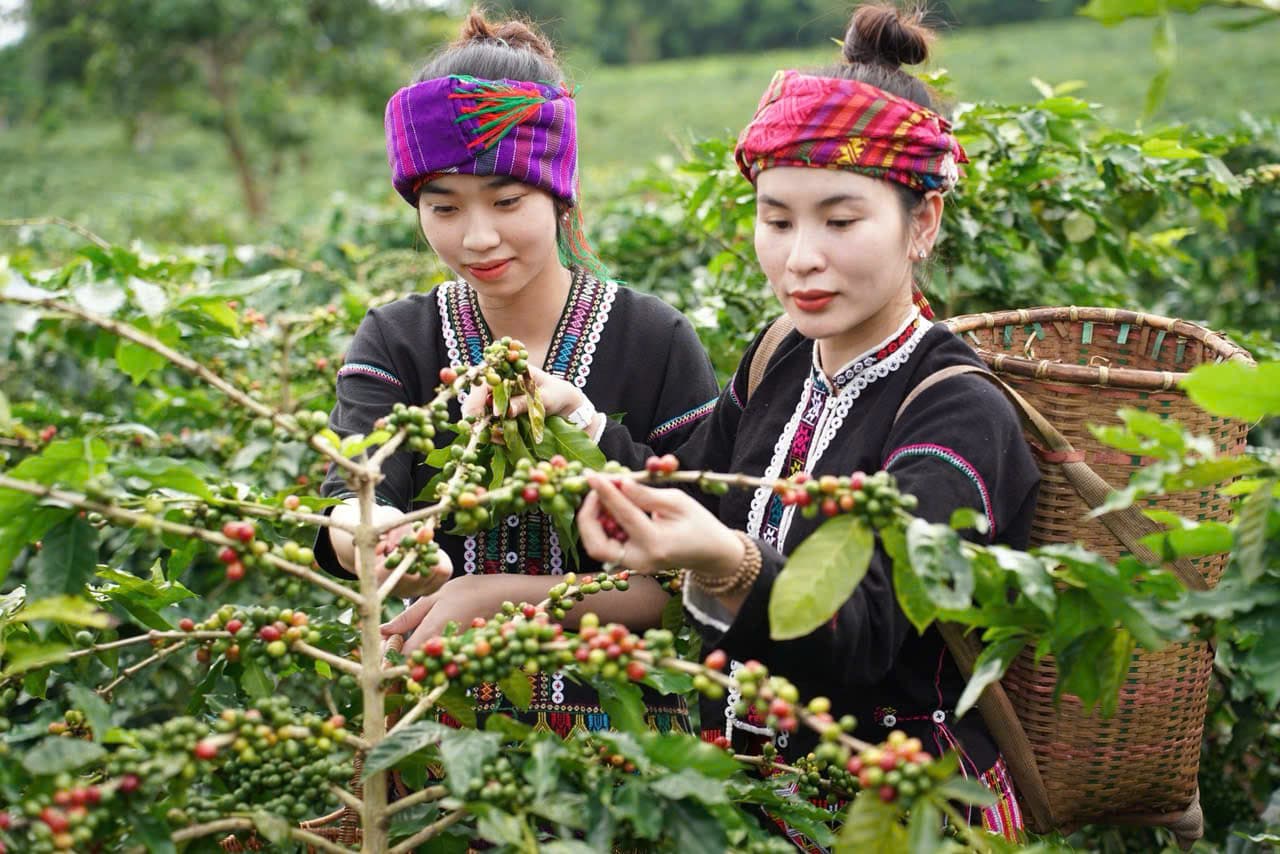
The search for exceptional coffee always leads to exceptional places. In Vietnam, that place is Khe Sanh — a highland region in Quang Tri Province where volcanic history, mountain altitude, and unique climate patterns converge to create one of Southeast Asia's most distinctive coffee terroirs.
The Volcanic Foundation
Khe Sanh's coffee excellence begins underground. The region sits atop ancient volcanic soil, rich in basalt deposits from eruptions millions of years ago. This geological heritage provides:
| Mineral | Benefit for Coffee |
|---|---|
| Iron | Enhanced root development |
| Phosphorus | Improved bean density |
| Potassium | Better flavor compounds |
| Magnesium | Chlorophyll production |
The soil's dark, mineral-rich composition creates ideal conditions for arabica cultivation — porous enough for drainage yet retentive enough to hold moisture during dry spells.
Altitude: The 800-1,200m Sweet Spot
Coffee grown at elevation develops complexity that lowland beans simply cannot match. At Khe Sanh's 800-1,200 meter altitude:
- Slower maturation: Beans develop over 9-11 months instead of 6-7
- Higher sugar concentration: Cool nights allow sugars to accumulate
- Denser beans: Slower growth creates more compact cellular structure
- Complex acids: Extended development produces nuanced acidity
"Every 100 meters of elevation adds another layer of complexity to the cup. At Khe Sanh, we're tasting the mountain itself." — Master Roaster, Lan Coffee
The Humidity Factor
Unlike other Vietnamese coffee regions, Khe Sanh experiences a unique microclimate influenced by the Truong Son mountain range. Morning mists roll through the valleys, providing:
- Natural irrigation during dry season
- Protection from extreme sun exposure
- Slow, even drying of cherries on the plant
- Reduced pest pressure compared to humid lowlands
Comparing Vietnamese Coffee Regions
| Region | Altitude | Primary Variety | Flavor Profile |
|---|---|---|---|
| Khe Sanh | 800-1,200m | Arabica | Fruity, complex, bright |
| Dalat | 1,200-1,500m | Arabica | Floral, tea-like |
| Buon Ma Thuot | 400-600m | Robusta | Earthy, bold, nutty |
| Son La | 600-1,000m | Arabica | Citrus, medium body |
What This Means for Your Cup
When you taste Khe Sanh coffee, you're experiencing millions of years of geological history, combined with perfect altitude and climate conditions. The result is a cup with:
- Bright, citrus-forward acidity
- Stone fruit sweetness (think peach and apricot)
- Clean, lingering finish
- Medium body with silky mouthfeel
This isn't just marketing — it's terroir science. The same principles that make Burgundy wines distinctive or Ethiopian Yirgacheffe legendary apply to Khe Sanh arabica.
Next in our Origin Stories series: How shade-tree agroforestry enhances both quality and sustainability in Khe Sanh coffee cultivation.