It's in your espresso, it saved coffee once, and it's half of Arabica's DNA. Time to meet it properly.
The bean with a reputation
Ask a coffee lover to describe Robusta and you will probably hear the same three words: strong, bitter, cheap. Robusta makes up roughly 40% of the world's coffee, and most people have never tasted a good one. Few people know where it really comes from.
So let's start with a fact that changes the conversation.
A family secret
Arabica, the bean everyone calls "the good one", is not a pure line. Genetic studies show that Arabica was born from a natural cross between two wild coffee species. One of them is Coffea canephora, the species we call Robusta. A 2024 study in Nature Genetics places that meeting hundreds of thousands of years ago, in the forests of today's Ethiopia and South Sudan.
In other words: Robusta isn't Arabica's rival. It's one of its parents.
Built to defend itself
Robusta grows wild in the warm, humid lowlands of Central and West Africa, where insects and fungi are everywhere. Its answer was chemistry. Robusta carries roughly twice the caffeine of Arabica, and caffeine is bitter and toxic to many insects.
When scientists sequenced the Robusta genome in 2014, they found something remarkable. Coffee developed its caffeine-making genes on its own, separately from tea and cacao. Three plants arrived at the same molecule by three different paths. That is how useful caffeine is to a plant.
The disease that redrew the coffee map
In 1869, a fungus called coffee leaf rust appeared in Ceylon (today's Sri Lanka), then one of the world's great coffee producers. Within a few decades its Arabica farms were finished, and the island turned to tea instead. That is the origin of Ceylon tea.
The rust kept travelling across Asia. When it hit the Dutch plantations on Java, growers needed a plant that could survive it. Around the turn of the 20th century, Robusta seeds from the Congo basin were planted across Indonesia. Robusta stood firm where Arabica fell, and it has been central to Asian coffee ever since.
Quick facts: Arabica vs Robusta
So why the bad name?
Most of the Robusta the world has tasted was grown for volume, not flavour. It was often picked in a hurry, roasted very dark and used to bulk up cheap blends. The bean's quality was rarely the problem; the way it was treated was.
That is changing. The Coffee Quality Institute, working with Uganda's coffee authority, created Fine Robusta grading standards. Robusta now has its own trained cuppers and scoring system, just like specialty Arabica. Italian espresso roasters have known the secret for a long time: a share of good Robusta gives espresso its body and its thick, lasting crema.
Vietnam: Robusta's second home
French settlers brought coffee to Vietnam in the 19th century. Today Vietnam is the world's second-largest coffee producer and by far the largest producer of Robusta, which makes up the large majority of its harvest.
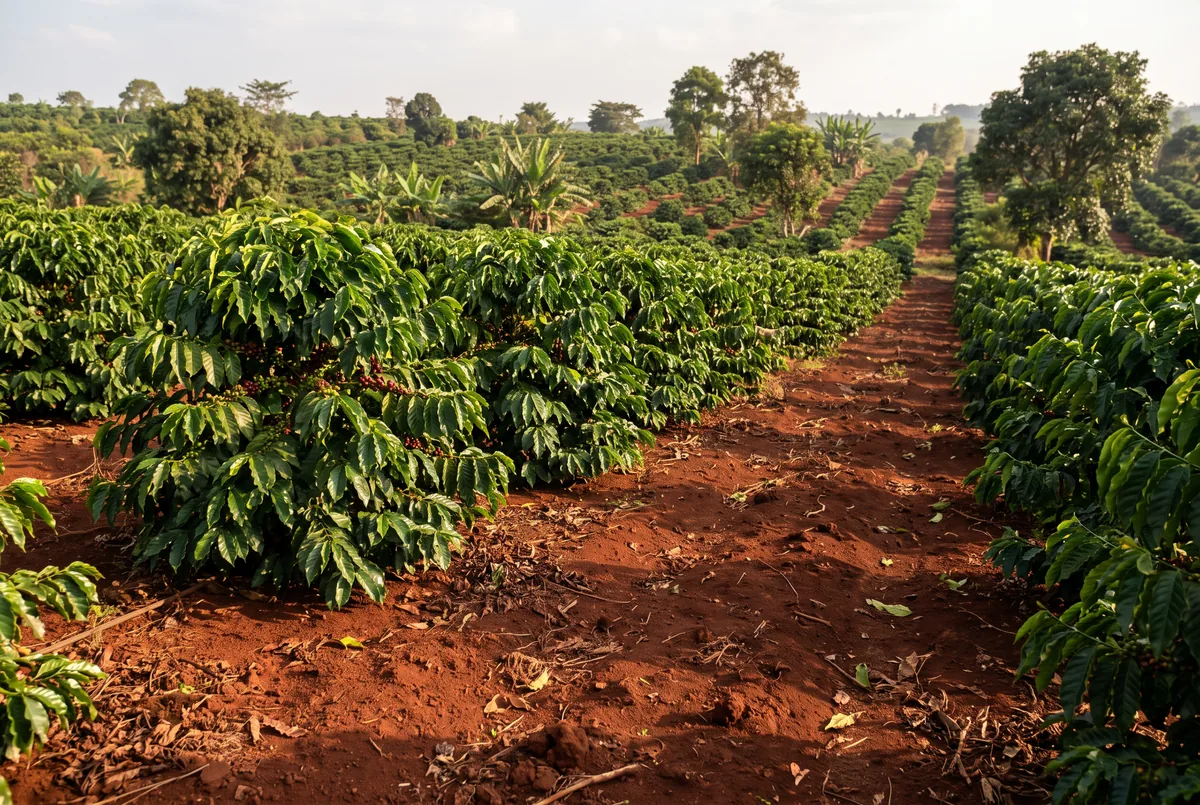
The heart of it is Đắk Lắk, in the Central Highlands. Its capital, Buôn Ma Thuột, is known across Vietnam as the coffee capital and hosts a national coffee festival. The coffee grows on deep red basalt soil, the weathered remains of ancient volcanoes.
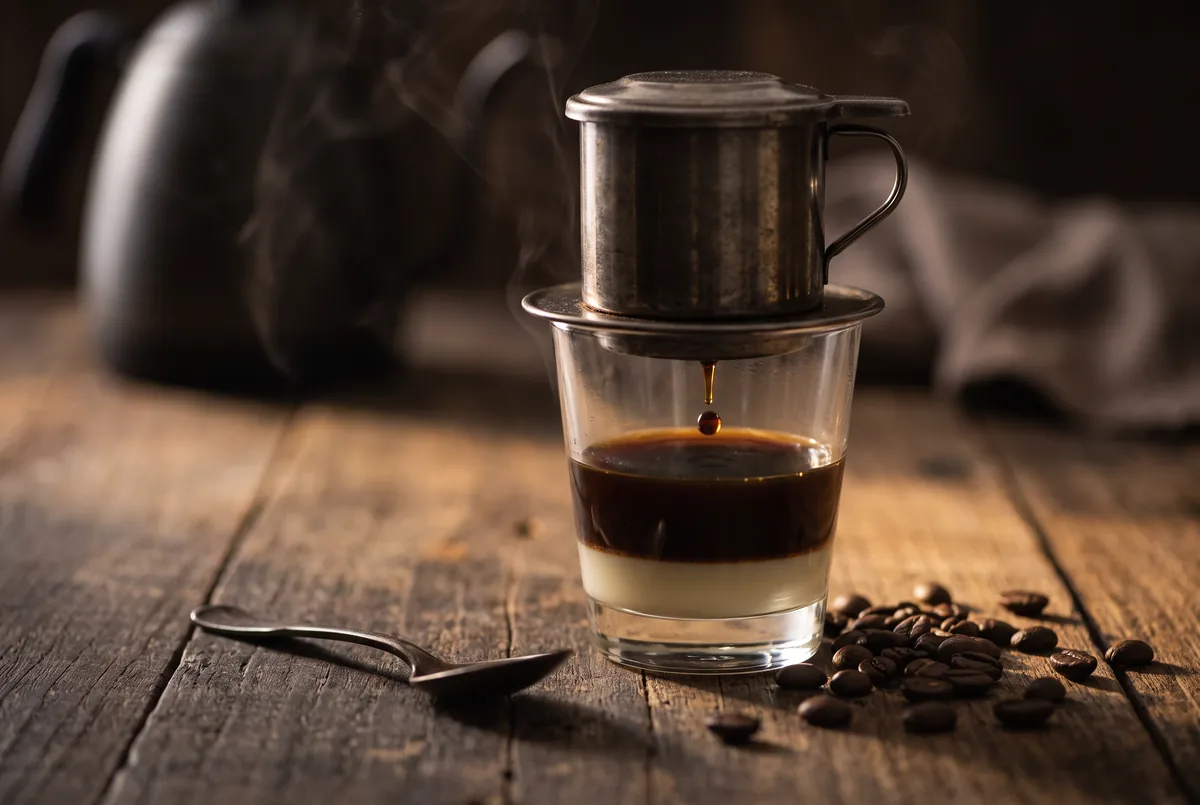
It is also where Vietnam's coffee culture comes from. A slow drip through a small metal phin, a layer of sweet condensed milk, ice for cà phê sữa đá, or salt for cà phê muối. These drinks were built around Robusta's strength: a coffee bold enough to stand up to milk and sugar and still taste like coffee.
And the future?
For years Robusta was called the bean that would survive climate change. A 2015 study warned that the land suitable for Arabica could shrink by around half by 2050, making the tougher Robusta look like the answer.
The picture is more complicated. A 2020 study of farms across Asia found that Robusta yields drop when the average temperature rises above about 20.5°C, much cooler than people assumed. The lesson: no single bean is a guaranteed winner. The future of coffee depends on understanding each species and caring for the farms that grow it.
Our view at LAN Coffee
We don't believe in a coffee ranking where one bean is "good" and the other is "cheap". Arabica and Robusta solve different problems and give different gifts. Arabica brings lift and aroma; Robusta brings body, strength and depth.
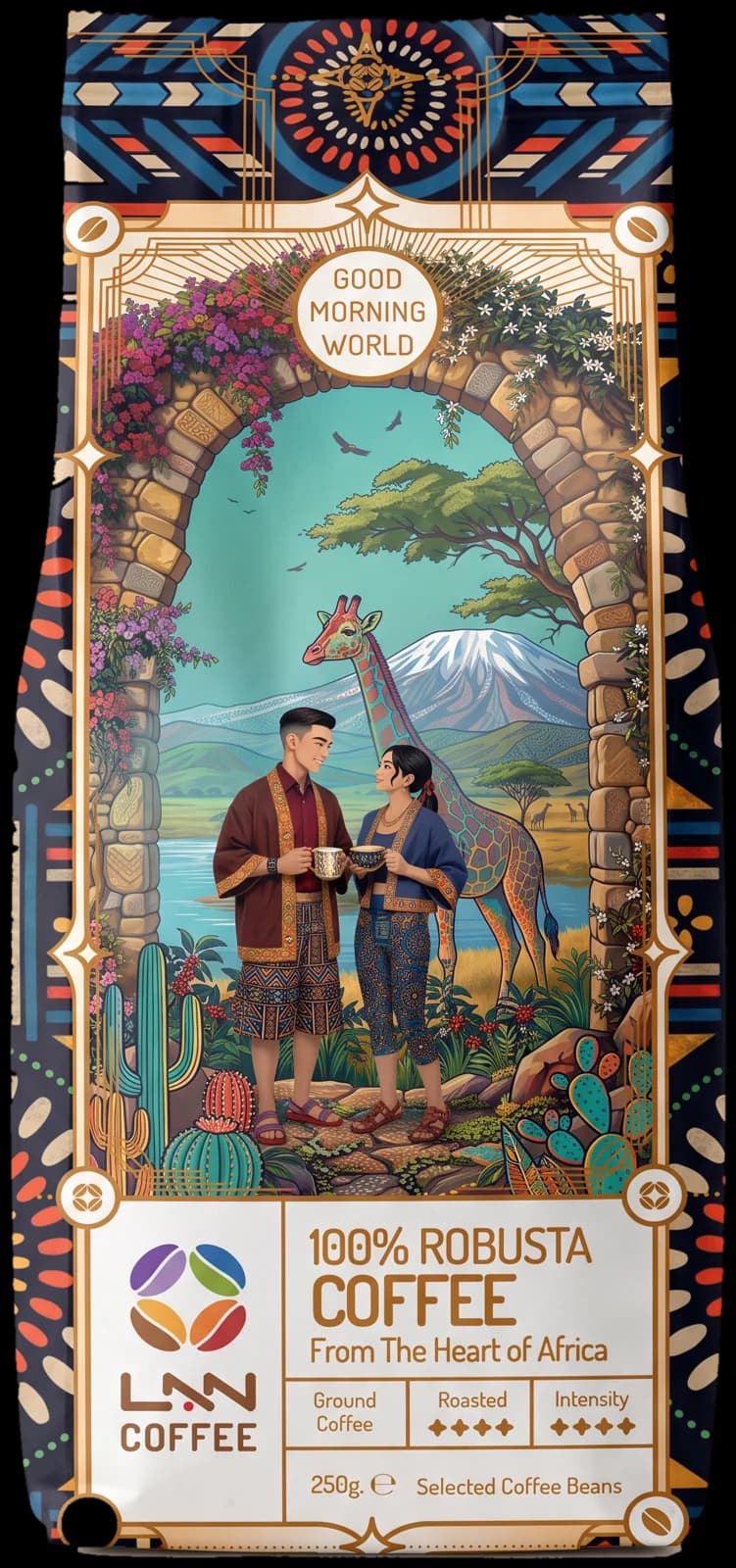
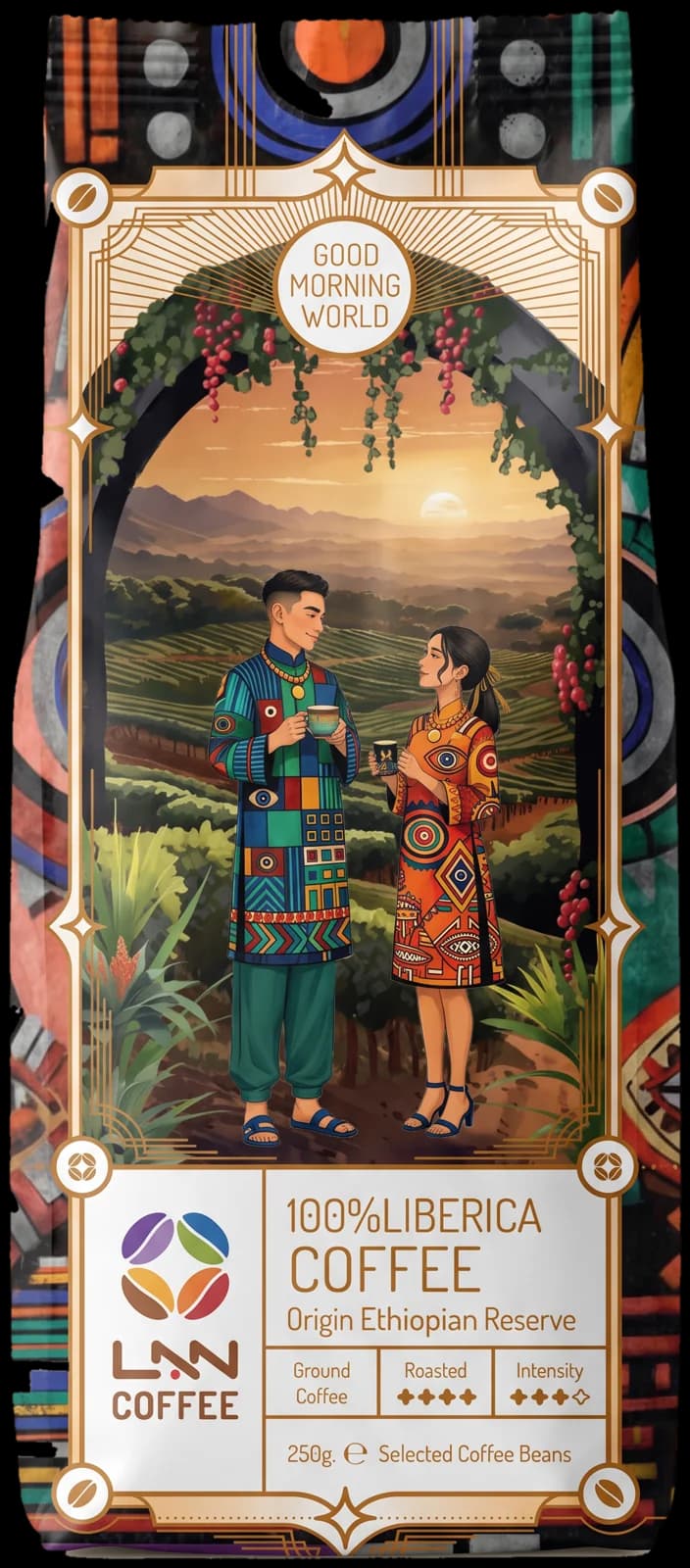
Our 100% Robusta, "From The Heart of Africa", is a nod to where this species began: the forests of Central Africa. It is grown in Vietnam, the country that made Robusta part of everyday life. Brew it strong, try it the Vietnamese way over condensed milk, and taste what Robusta is like when it's treated with respect.
Sources
- Scalabrin, S. et al. (2024). A single polyploidization event at the origin of the tetraploid genome of Coffea arabica. Nature Genetics. Summary: buffalo.edu
- Denoeud, F. et al. (2014). The coffee genome provides insight into the convergent evolution of caffeine biosynthesis. Science 345: 1181. hal.inrae.fr
- McCook, S. (2006). Global rust belt: Hemileia vastatrix and the ecological integration of world coffee production since 1850. Journal of Global History. cambridge.org
- NPR (2018). Coffee rust threatens Latin American crop; 150 years ago, it wiped out an empire. npr.org
- Bunn, C. et al. (2015). A bitter cup: climate change profile of global production of Arabica and Robusta coffee. Climatic Change 129: 89–101.
- Kath, J. et al. (2020). Not so robust: Robusta coffee production is highly sensitive to temperature. Global Change Biology. Summary: alliancebioversityciat.org
- Coffee Quality Institute: Fine Robusta standards and R Grader programme. coffeeinstitute.org
- International Coffee Organization: production statistics. ico.org
- VietnamNet: Dak Lak, the capital of Vietnamese coffee. vietnamnet.vn